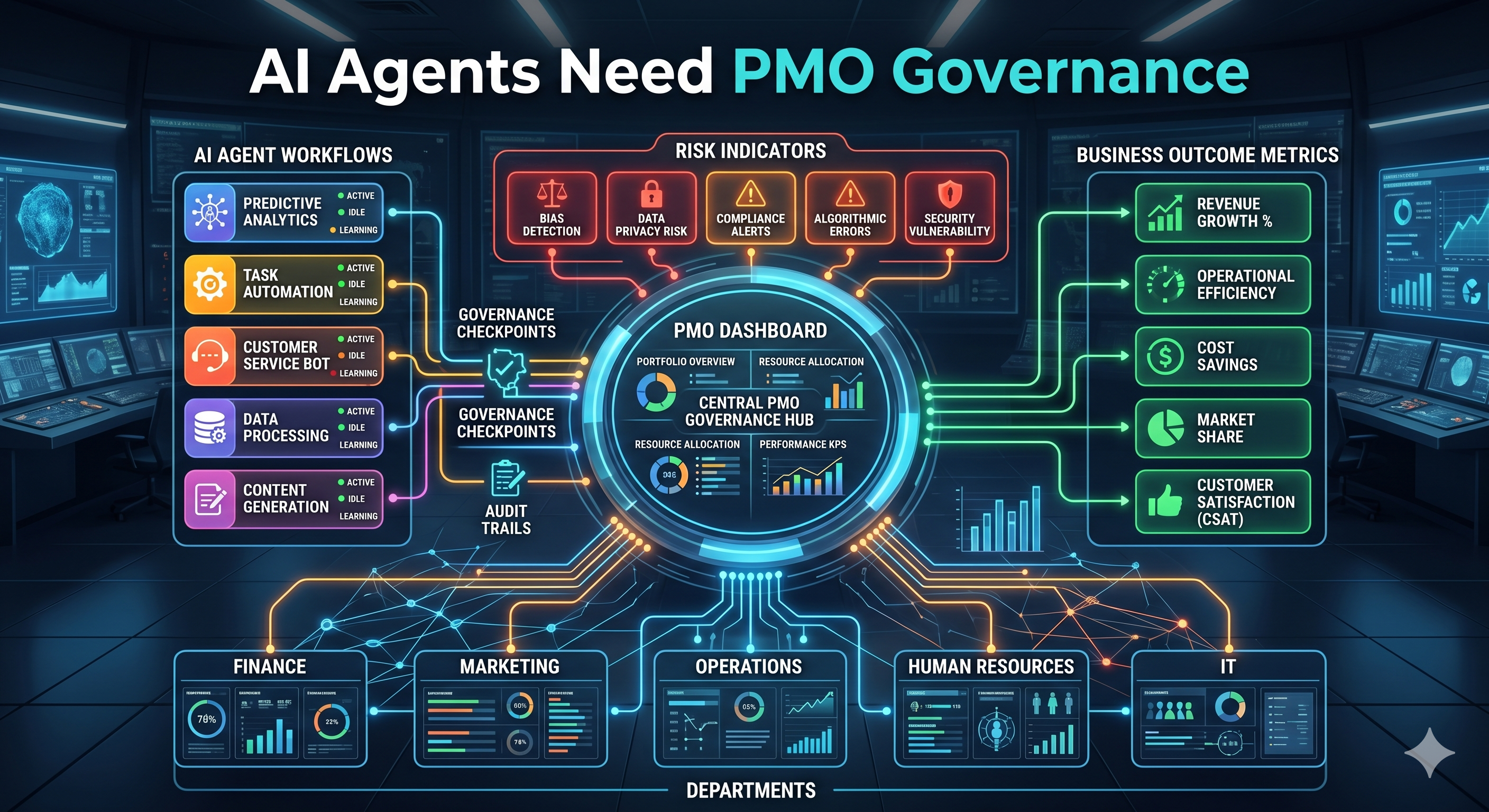
Many organizations have good strategies and hardworking project teams, yet still struggle to deliver. The problem often sits in the middle: weak project governance.
Governance is not bureaucracy. It is the structure that defines how decisions are made, how risks are escalated, how priorities are managed, and how accountability is enforced.
Consulting firms continue to emphasize governance because transformation work is becoming more complex. Clarkston’s 2026 trends report highlights the need for governance to keep pace with AI and agent deployments. PwC’s project management AI positioning also emphasizes integrating strategy and execution, which requires decision structures that keep work aligned with business outcomes.
Weak governance usually shows up in predictable ways.
No one knows who owns the final decision. Steering committee meetings become status updates instead of decision forums. Risks are discussed but not resolved. Project managers escalate issues but receive no answer. Executives change priorities without addressing the impact. Teams continue working while major assumptions remain unsettled.
When governance is weak, project teams compensate with heroics. That may work for a while, but it is not sustainable.
Strong governance begins with clear roles. Every project should have an executive sponsor, business owner, project manager, delivery leads, subject matter experts, and decision-making body. These roles should not exist only on a charter. They should be active.
The executive sponsor owns strategic alignment and removes barriers. The business owner defines value and accepts business outcomes. The project manager manages delivery discipline. The steering committee makes timely decisions. Subject matter experts provide operational truth.
Next, governance needs thresholds. Not every issue belongs with executives. But certain conditions should trigger escalation: budget variance, schedule slippage, scope change, unresolved policy decisions, vendor performance issues, resource conflicts, or risks that threaten business value.
Governance also needs cadence. A monthly steering committee may be too slow for a high-risk project. Weekly executive check-ins may be necessary during critical phases. The cadence should match the project’s risk profile.
Finally, governance needs decision documentation. A decision that is not documented will be relitigated later. Decision logs protect the project from confusion, memory gaps, and political revision.
For small and mid-sized organizations, project governance should be lean. A practical model may include a one-page charter, weekly delivery meeting, biweekly sponsor meeting, monthly steering committee, risk and issue log, decision log, and escalation matrix. That is enough to create control without burying the team in process.
A consulting firm can help leaders design governance that fits their culture and project size. The goal is not more meetings. The goal is faster decisions, clearer accountability, and fewer surprises.
Strategy does not execute itself. Project teams cannot succeed when leadership is unclear, unavailable, or misaligned. Governance is where strategy becomes delivery.