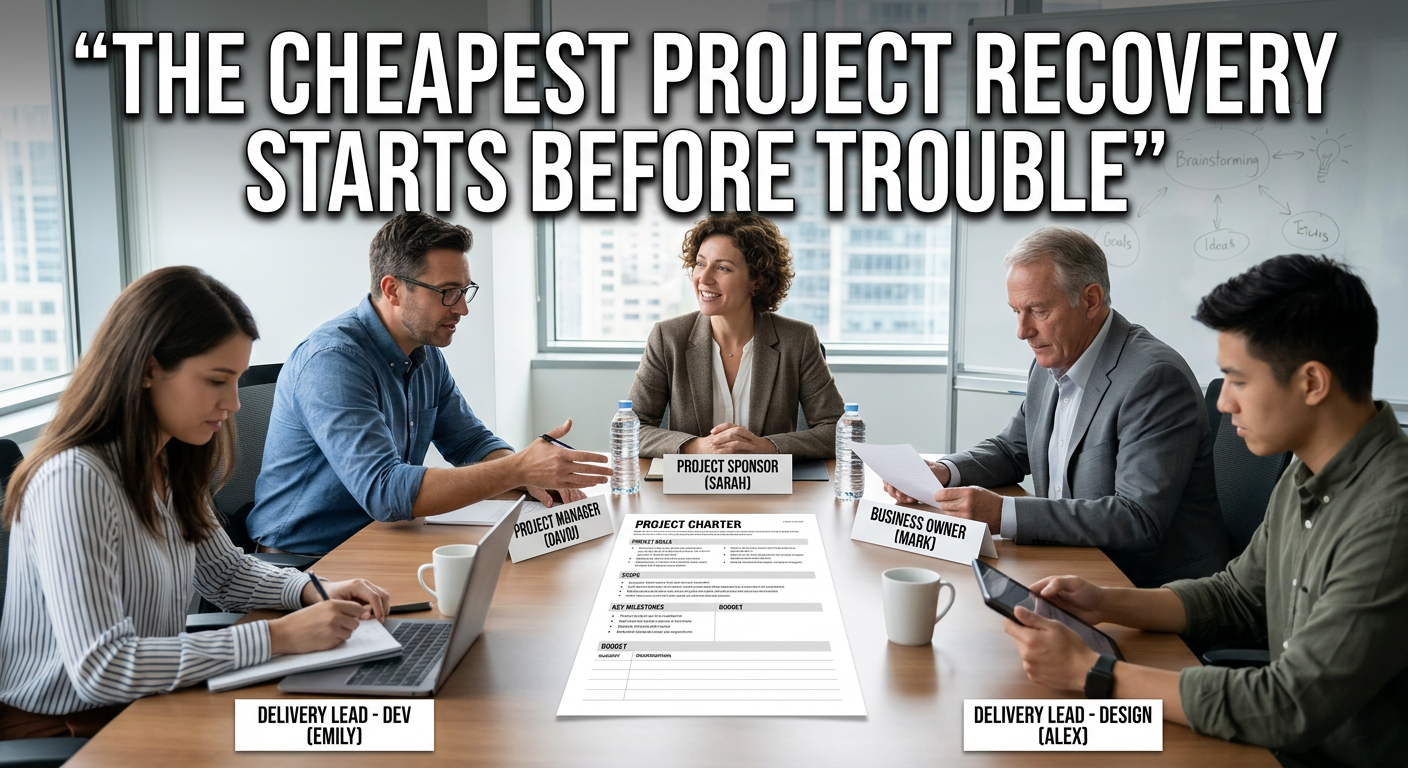
The project charter as a project-recovery prevention tool
PMI’s September 23, 2026 guidance on project charters emphasizes that a strong charter creates clarity around purpose, decision-making boundaries, roles, and authority before delivery begins. That matters because many troubled projects later suffer from the exact opposite conditions: unclear ownership, vague objectives, weak sponsorship, shifting scope, and slow decisions.

Not Every Troubled Project Should Be Rescued
Not every troubled project should be rescued, leaders need a disciplined decision framework to determine whether to recover, reset, or stop.

Troubled Projects Need Diagnosis Before Recovery
Troubled projects need diagnosis before recovery — and this is where project management consultants can create immediate value.

From Red Project to Recovery: How AI Can Help Project Managers Diagnose, Stabilize, and Rescue Troubled Projects
When a project begins to fail, the first problem is often not fixing it—it is understanding why it is failing. Schedule slippage, budget overruns, unresolved risks, scope growth, resource constraints, stakeholder dissatisfaction, and poor decision-making can interact in ways that make the true causes difficult to see.

Project Rescue: How to Recover a Troubled Project Before It Becomes a Failure
Most troubled projects do not fail because people are lazy or careless. They fail because warning signs are missed, minimized, or explained away for too long. A project that is behind schedule, over budget, politically tense, or losing stakeholder confidence does not need another optimistic status report. It needs a structured recovery plan.