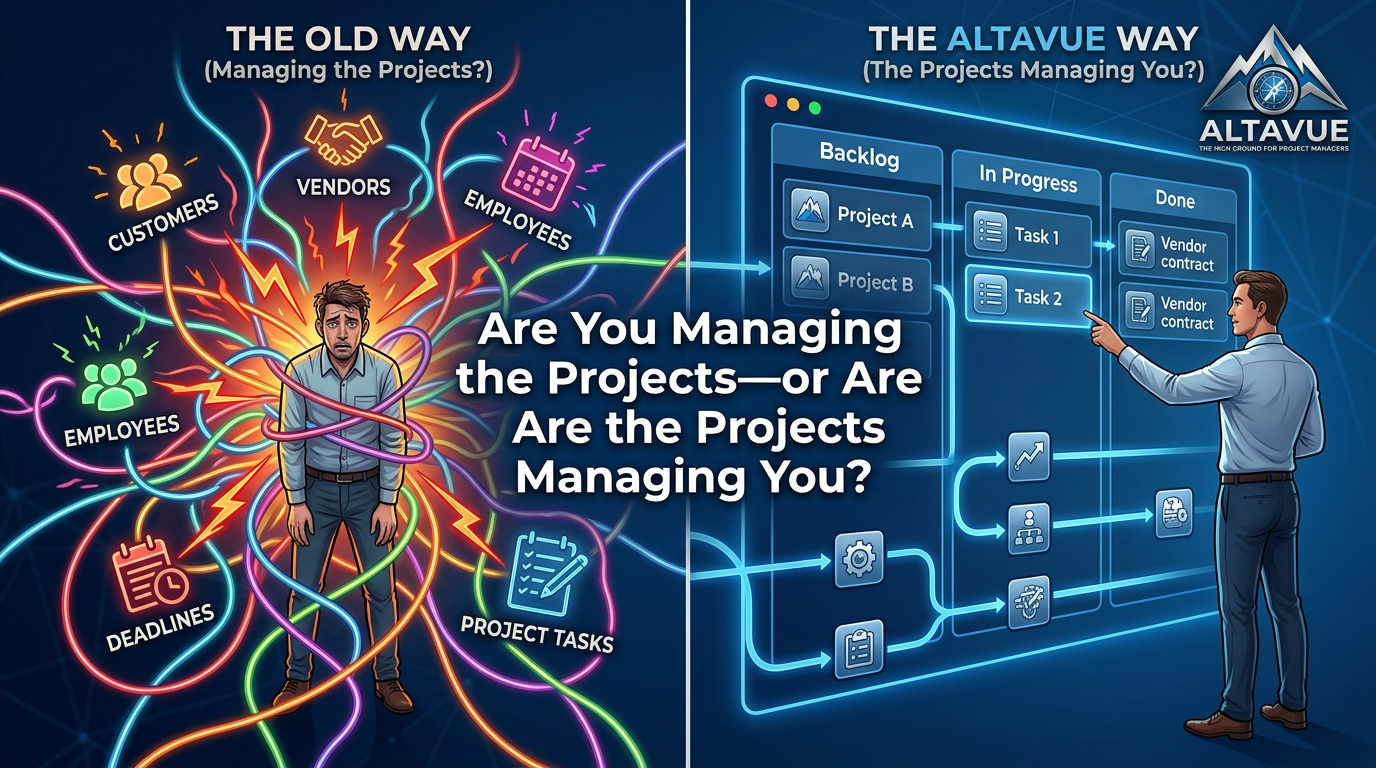
Project teams rush into scope too quickly. I see it all the time.
A business leader says, “We need a new system.” A customer says, “We need a mobile app.” An operations team says, “We need to automate this process.” A contractor hears, “We need this facility renovated.” And just like that, the project is moving toward a solution. Requirements get written, estimates get built, schedules come together, vendors get called, and tasks get handed out.
But one question should have come before all of it: what problem are we actually trying to solve?
That’s the problem statement, and I’d argue that a weak problem statement almost always produces weak scope.
Solving the Wrong Problem Perfectly
If you misunderstand the problem, you can execute a solution flawlessly and still fail. That’s one of the most dangerous kinds of project failure, because nothing looks wrong. The project finishes on time. The deliverable works. The team checks every box. And the business still doesn’t get the outcome it needed.
A good problem statement exists to prevent exactly that. It describes the current condition that needs to change. Not the fix. The condition. That distinction is everything.
Name the Condition, Not the Fix
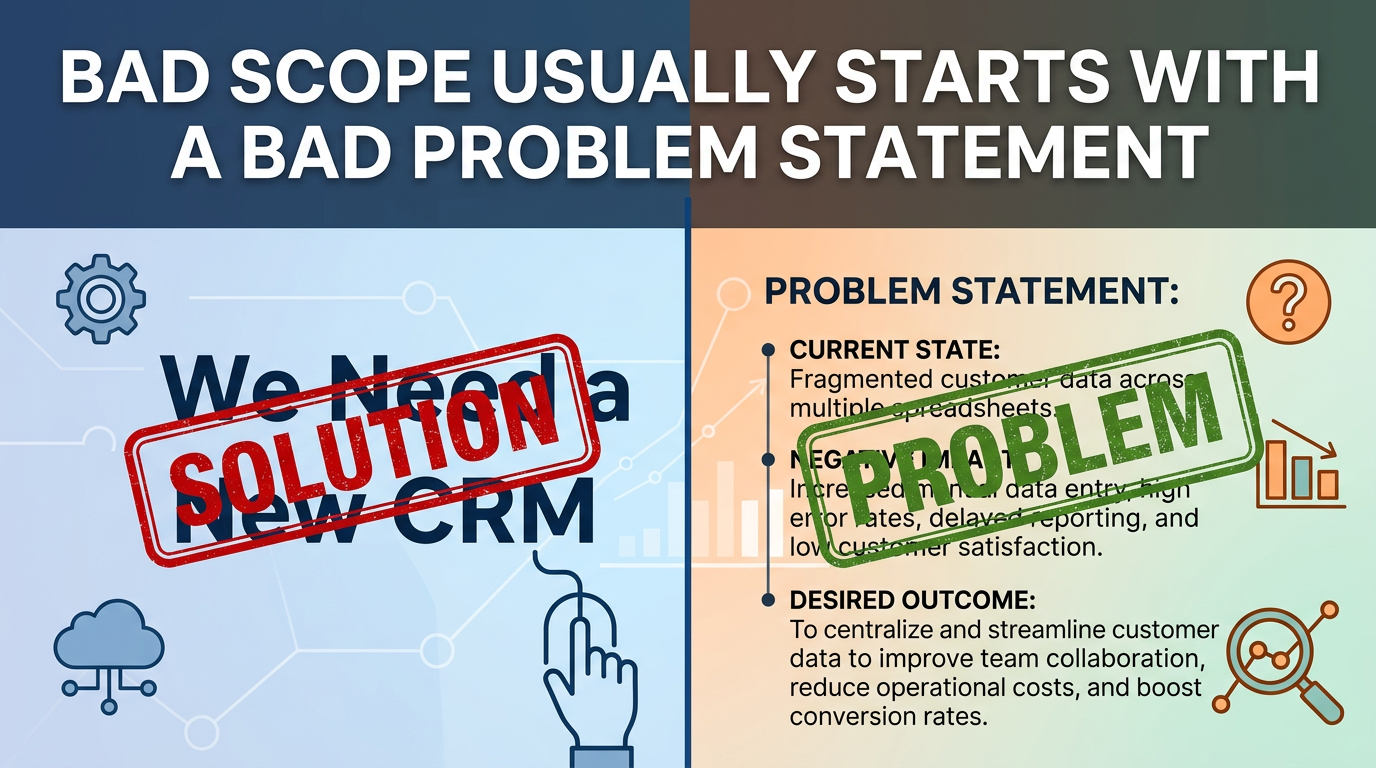
“We need a new CRM” is not a problem statement. It’s a proposed solution wearing a problem statement’s clothes. Compare it with this:
“Our sales team currently tracks customer interactions across email, spreadsheets, and individual notes, resulting in inconsistent follow-up, limited pipeline visibility, and duplicated effort.”
Now we understand the condition. We can investigate it, we can measure it, and we can decide whether a new CRM is really the best answer or just the first one somebody thought of.
The same goes for “We need a mobile app.” Try this instead:
“Customers currently must call our office to schedule service appointments, creating long hold times, missed calls, and administrative workload during peak periods.”
Written that way, the organization can weigh real options. A mobile app might be one of them. A customer portal might be another. Text-message scheduling might be enough on its own. And some process changes might solve part of the problem without buying any new software at all.
That’s the real value of a problem statement. It draws a line between understanding the problem and choosing the solution, so you don’t lock in an answer before you’ve asked the right questions.
Frame the Project Before You Scope It
A useful problem statement tells you what’s happening today, who it affects, and what it’s costing. It explains how you know it’s a real problem, why it matters now, and what happens if you do nothing. Notice what isn’t on that list: the solution.
From there, I want to understand the environment the project will live in before anyone starts defining scope. Who are the stakeholders? What outcome are we trying to achieve? What constraints are we working under, and what assumptions are we making without realizing it? Which processes are involved, what pain points are actually happening on the ground, and what evidence do we have that they’re real?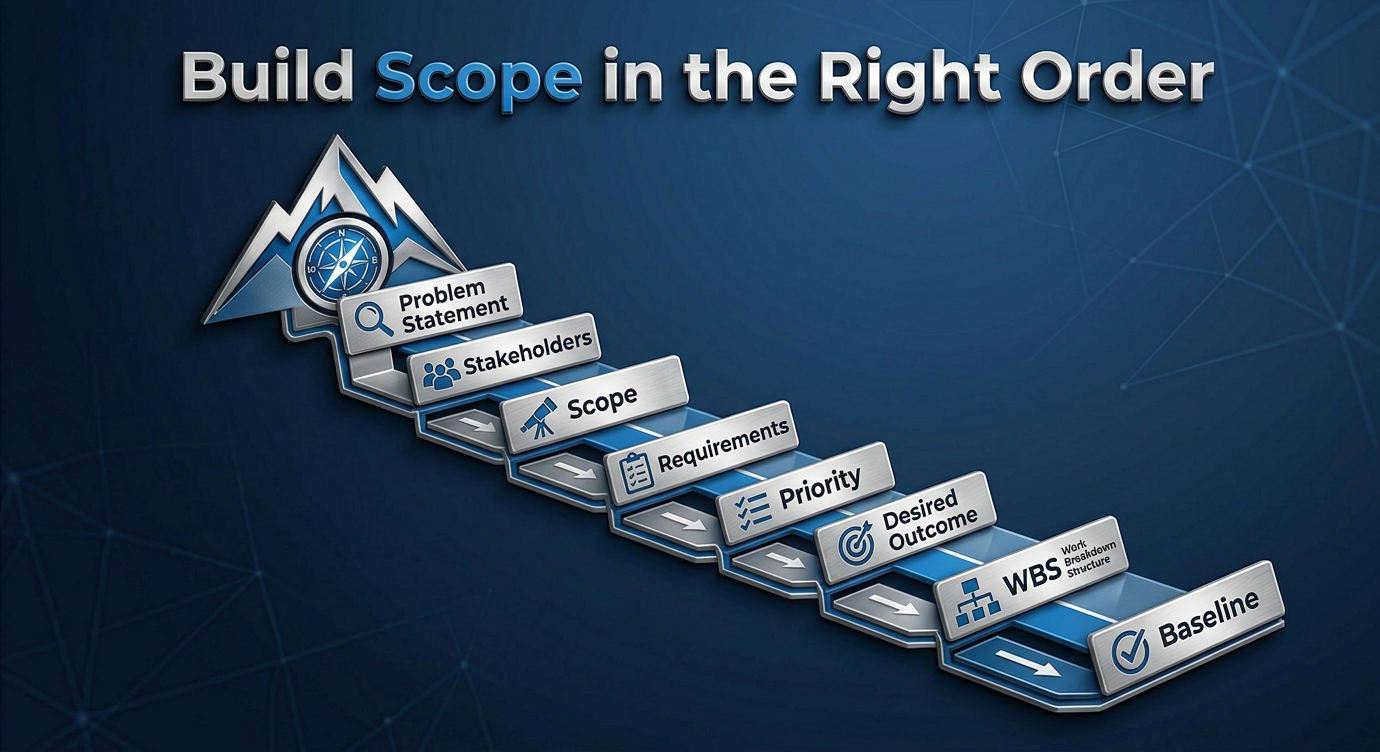
The Army builds this discipline into how it plans. Before anyone develops a course of action, there’s mission analysis: understand the mission, the conditions, the constraints, and the intent. Skip that step and you can end up with a brilliant plan for the wrong mission. Projects are no different.
The Problem Is the Reason. The Scope Is the Boundary.
Once the project is framed, you can start moving toward scope. But it’s worth being clear that a problem statement and a scope statement are not the same thing. The problem statement explains why the project exists. The scope statement explains what the project will deliver.
A strong scope statement spells out what’s included and, just as importantly, what isn’t. It names the deliverables, the requirements that apply, the constraints that matter, the assumptions being made, and what acceptance looks like. Those pieces become the foundation for the work breakdown structure, which breaks the approved scope down into manageable chunks of work.
That progression matters. Problem, then outcome, then scope, requirements, WBS, baseline, and finally execution. Too many organizations run it in reverse. They start with a list of tasks and then try to work out what project those tasks belong to. A project shouldn’t begin with tasks. It should begin with understanding.
The Baseline Turns Arguments Into Decisions
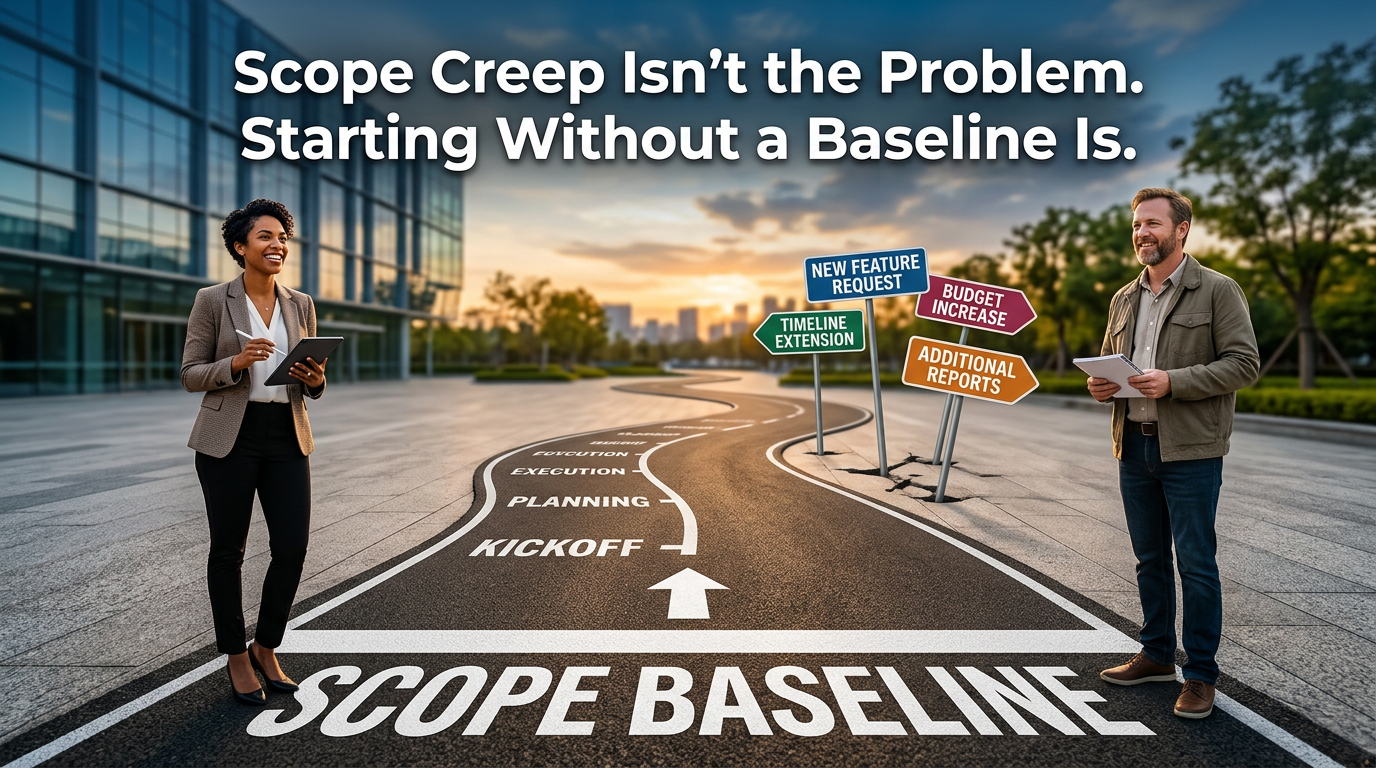
That brings us to the scope baseline. A baseline isn’t just “the scope document.” It’s the approved reference point the project uses to measure every future change and every report on performance.
That matters because projects change. Customers change their minds, markets shift, regulations move, new risks surface, and technical limits show up that nobody saw coming. A baseline doesn’t stop change. It gives you a controlled way to understand it.
Without one, every new request turns into an argument. Was this already included? Is it actually new? Does it need more budget? Will it push the schedule? Should something else come out to make room? Nobody can answer those questions with confidence if nobody clearly defined where the project started.
And a poor baseline is almost as dangerous as no baseline at all. A good one is clear and specific enough to guide real decisions. It ties directly to the business problem and to outcomes you can measure. It’s backed by requirements, structured through the WBS, realistic about constraints, explicit about what’s excluded, and approved by the people who actually have the authority to approve it. You don’t need every detail on day one. You do need everyone to understand the boundaries.
“I Thought That Was Included”
This matters enormously for small business owners, because small businesses often start projects informally. A customer asks for something. The owner gets the idea. A price gets discussed, the work starts, and everyone feels aligned. Until they don’t.
Then the customer says, “I thought that was included.” The owner says, “That was never part of the quote.” The customer comes back with, “That was obviously part of what we asked for.” Now the relationship is under pressure, and usually it’s because the project skipped two things at the start: a clear problem statement and a clear scope baseline.
A lot of small business owners see that kind of structure as unnecessary paperwork. I see it differently. The problem statement protects the investment. The scope baseline protects the agreement. Together, they cut the odds that you deliver the wrong solution or give away work you never priced. For a project manager, those are control tools. For a business owner, they’re simply good business.
Why AltaVue Scope Starts With a Question, Not a Text Box
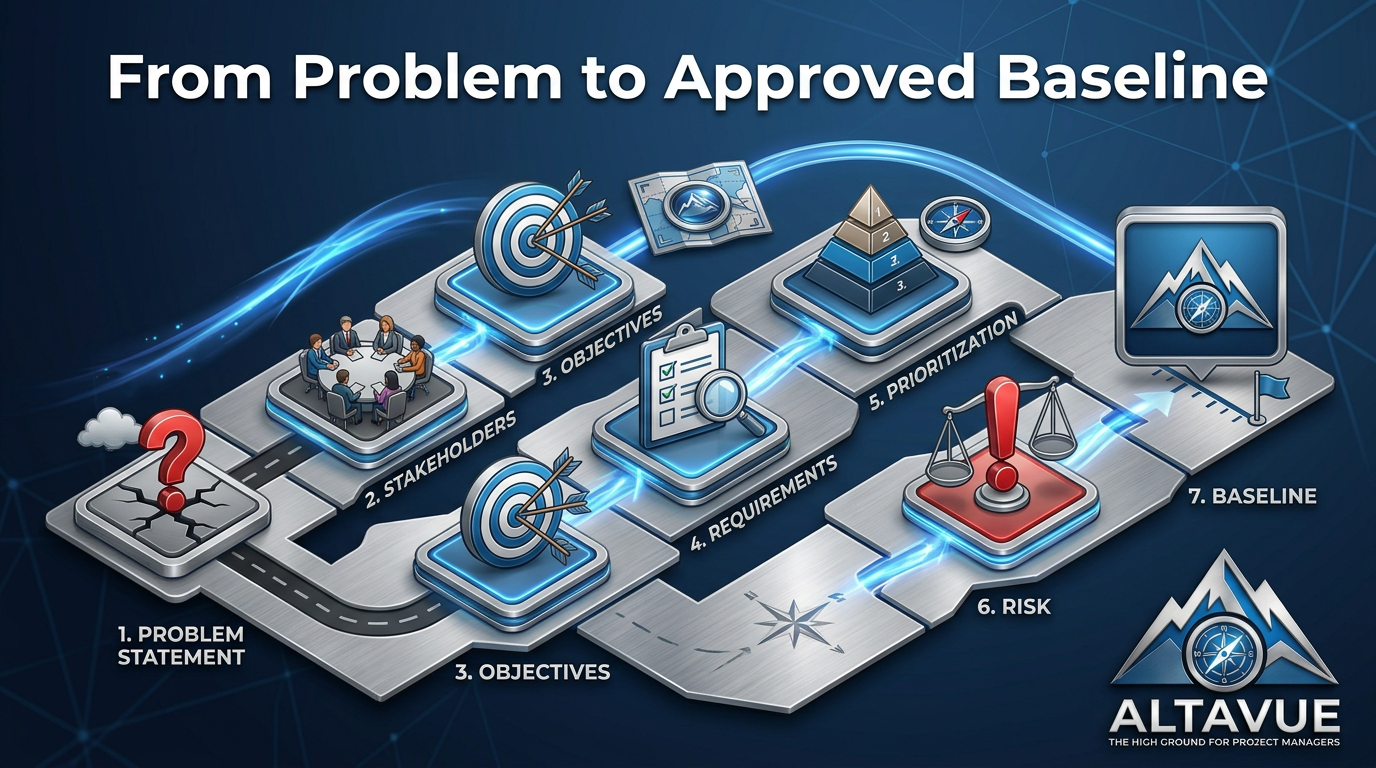
This is a big part of why we built AltaVue Scope around a guided process instead of handing users a blank box labeled “Scope.” It starts with framing: what the project is, what problem it solves, and why it matters. From there it walks through stakeholders, outcomes, scope, requirements, prioritization, and risk before it ever gets to the baseline.
That order is intentional. We want the baseline to be the result of structured thinking, not the first thing somebody typed. The goal is to help an experienced project manager work the same disciplined way every time, while also helping a small business owner learn what good project management looks like just by using the tool.
It also ties back to AltaVue’s core philosophy: define once, use everywhere. If the problem is defined correctly and the scope is built correctly, that structure carries forward into the WBS, the estimate, the schedule, tracking, time, agile work, and financial visibility. That’s why the front end of a project matters so much. Garbage in doesn’t magically turn into clarity later.
Every one of these problems feeds the next. A vague problem lets the scope drift. Drifting scope makes the estimate unreliable, and an unreliable estimate hurts the budget. A weak WBS produces a weak schedule. And an unclear baseline turns change control into a shouting match. Good project management builds the structure early so that chain never gets started.
One Test Before You Baseline Anything
So here’s the question I think every project team should ask before approving scope: can we describe the problem clearly without mentioning the solution?
If the answer is no, the project isn’t ready to baseline anything. Start with the problem. Define the outcome. Build the scope, create the WBS, approve the baseline, and then execute.
That sequence can feel slow at the beginning. It’s almost always faster than recovering a project that started out headed in the wrong direction.