Your Small Business Doesn’t Need More Hustle. It Needs Project Management.
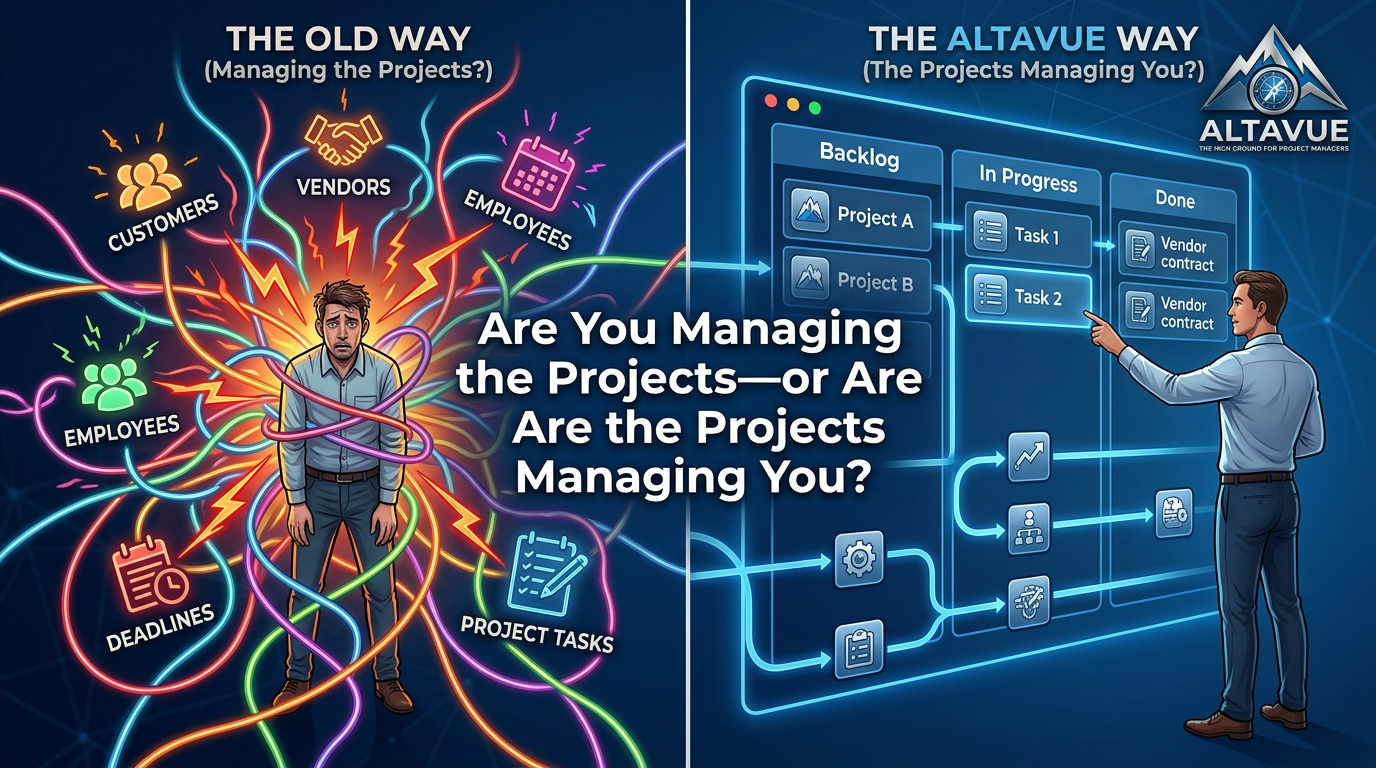
Small business owners are some of the best project managers I know. They just may not call themselves that. They manage:
- Customers
- Deadlines
- Vendors.
- Employees.
- Budgets.
- Deliverables.
- Emergencies.
- Priorities.
- Expectations.
And usually all of those things at the same time.
So when someone tells a small business owner: “You need project management.”
I understand the reaction. “I already manage everything.” Fair point.
The question is not whether a small business owner CAN manage projects. Most can. The better question is: Should the owner be personally managing every project as the business grows?
That is where things get interesting. Running a business and managing a project are not the same job. The business owner is thinking about:
- Sales
- Cash flow
- Customers
- Hiring
- Payroll
- Strategy
- Marketing
- Contracts
- Growth
- Operations
The project manager is thinking about:
- Scope
- Requirements
- Schedule
- Dependencies
- Risks
- Resources
- Decisions
- Stakeholders
- Changes
- Progress
- Quality
- Delivery
Those two roles overlap. But they are not identical. And when the same person is doing both, something usually gets less attention than it deserves. That is the hidden project management problem in small businesses.
The issue is rarely that nobody is working hard enough. The issue is that the business depends on informal coordination.
Everyone knows what needs to happen. Until they don’t. A customer asks for a change. A vendor misses a date. An employee gets pulled onto another job. A permit takes longer than expected. A requirement was never documented. The owner thought someone else was handling it. Someone assumed the customer approved it. A deadline moves. Costs increase.
Now everyone is reacting.
That is the difference project management creates. Project management turns assumptions into decisions.
- It turns ideas into scope.
- It turns promises into plans.
- It turns risks into actions.
- It turns “someone is handling it” into an owner and a due date.
- It turns activity into measurable progress.
For a small business, that is not bureaucracy. That is control. Here is the distinction I would make:
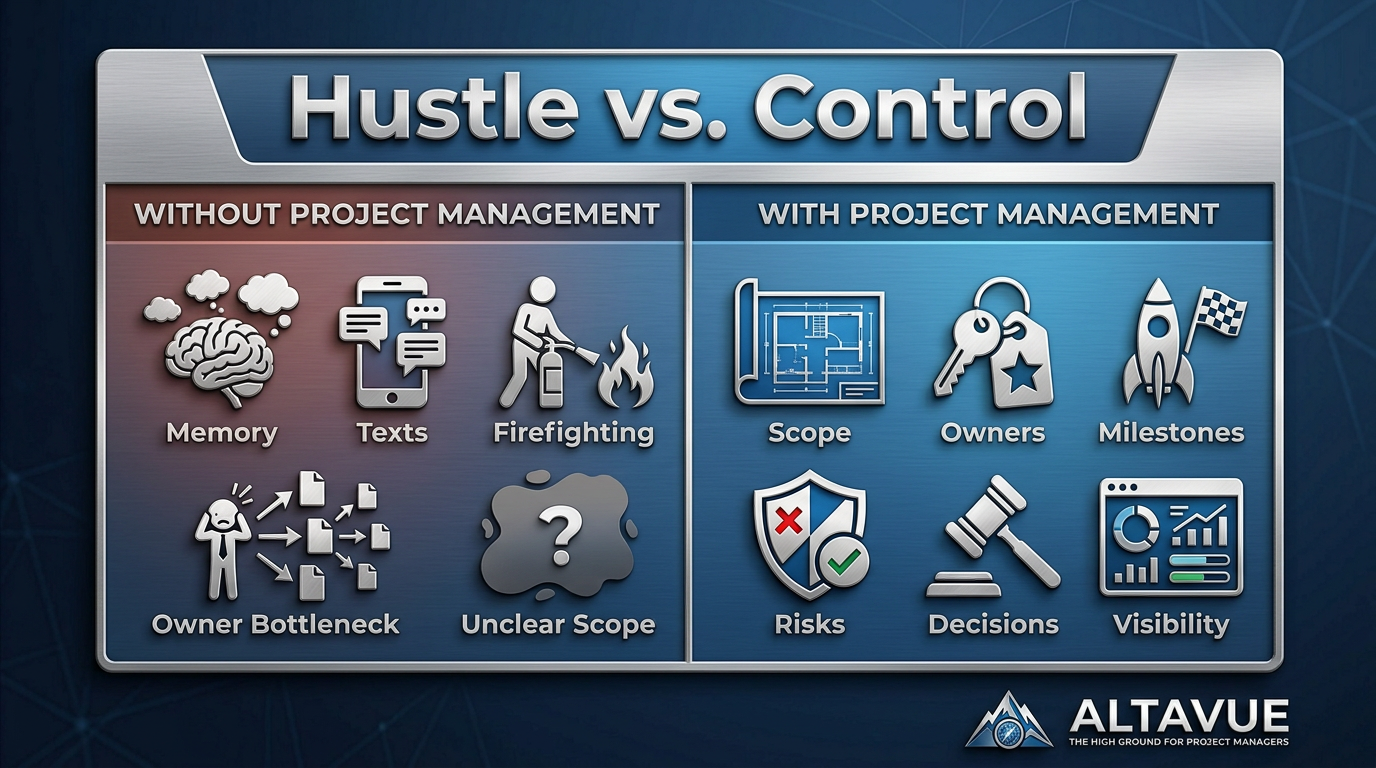
A business without project management often runs on memory, urgency, relationships, and heroic effort.
A business with project management runs on visibility, ownership, priorities, and repeatable processes.
That does not mean a small company needs a large PMO. It does not mean every project needs a certified project manager. And it definitely does not mean a five-person company needs enterprise-level process.
Project management should scale to the business. A small project may only need:
- A clear scope.
- A simple work breakdown.
- An owner for each deliverable.
- A realistic timeline.
- A short risk list.
- A decision log.
- A weekly status review.
- Clear customer expectations.
That is enough to prevent a surprising amount of chaos. So why can’t the owner just do that? They can.
And early in the life of a business, they probably should. The problem appears when the owner becomes the bottleneck.
- Every decision comes through them.
- Every customer asks them for status.
- Every employee needs clarification.
- Every vendor escalation reaches them.
- Every change requires their attention.
- Every project exists partly in their head.
That model works until the business becomes successful enough that it stops working. Growth exposes informal systems, one project becomes three, three customers become ten, two employees become twelve, one vendor becomes five, a few conversations become hundreds of handoffs.
At some point, hustle stops scaling. That is where dedicated project management starts creating leverage. A good project manager does not simply maintain a schedule. They create organizational capacity. They protect the owner from becoming the central routing point for every detail. They make the work visible. They force unresolved questions into the open. They manage customer expectations.
They coordinate dependencies. They surface risks before they become emergencies. They keep decisions moving. They protect scope. They create accountability.
And they give the owner better information to make business decisions.
That is a very different value proposition than “someone who updates a Gantt chart.” A project manager gives the business operating leverage. That does not mean every small business should hire a full-time project manager tomorrow.
There is a maturity path.
Stage One: The owner manages projects informally. This is normal. At very small scale, it may be perfectly appropriate.
Stage Two: The business adopts basic project management discipline. Clear scope. Defined outcomes. Tasks and ownership. Timelines. Risk tracking. Change control. Status visibility.
Stage Three: Someone inside the business takes on a formal project lead role. It may be an operations manager. A team lead. A coordinator. The owner may still be the sponsor.
Stage Four: The business hires or contracts with a dedicated project manager.

This usually happens when project volume, customer complexity, risk, or growth makes informal coordination too expensive. The key is recognizing when the business has crossed from one stage to the next.
Here are some warning signs.
- The owner spends too much time chasing status.
- Projects regularly finish later than expected.
- Customers ask for updates the business cannot answer quickly.
- Scope changes are not consistently documented.
- Team members are unclear on priorities.
- Important tasks live in email or text messages.
- Projects depend on one person remembering everything.
- Vendor problems are discovered late.
- The same mistakes happen repeatedly.
- Margins are lower than estimates suggested.
- Everyone feels busy, but leadership cannot clearly explain project health.
That is not a people problem. It is a system problem. And that is where project management becomes necessary.
There is another side to this discussion.
Small business owners should learn project management. Even if they eventually hire project managers. Why? Because the owner still needs to understand the language of delivery.
- Scope.
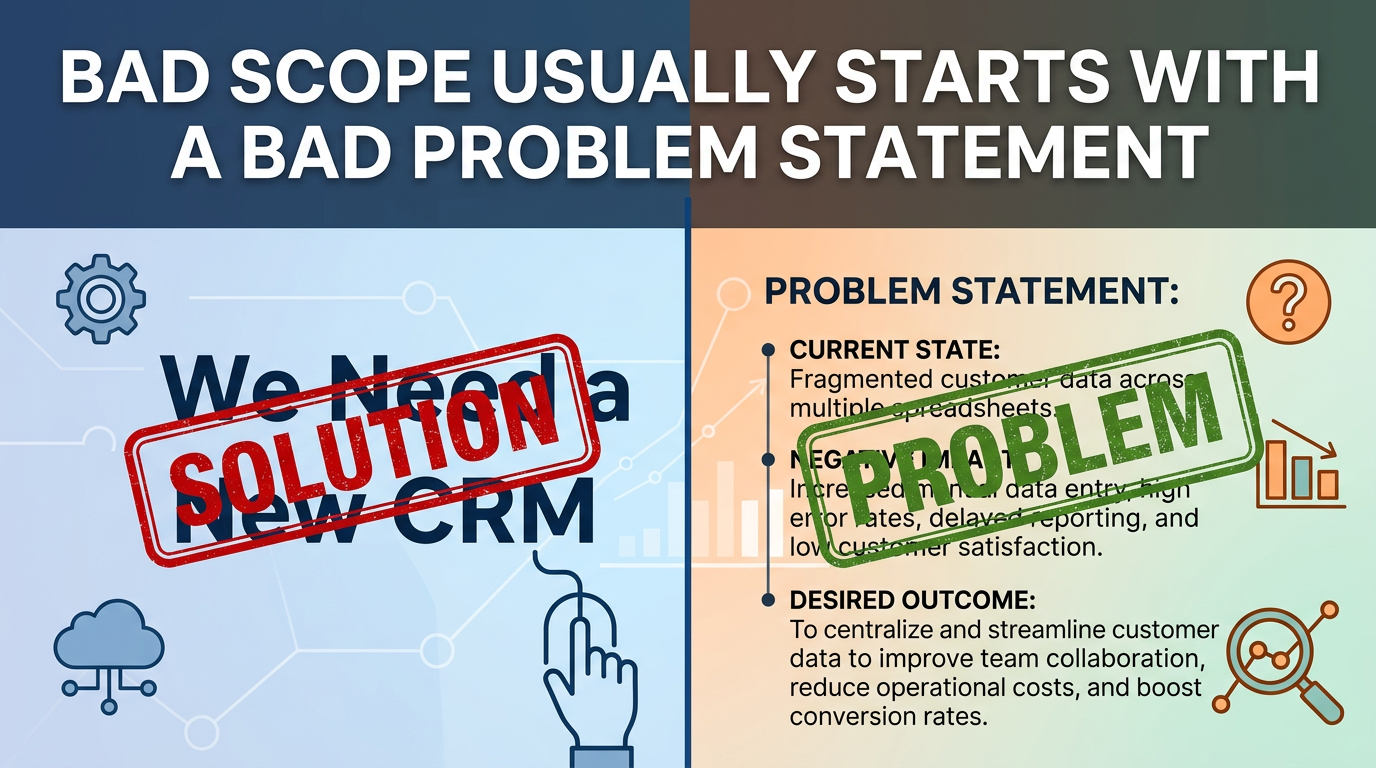
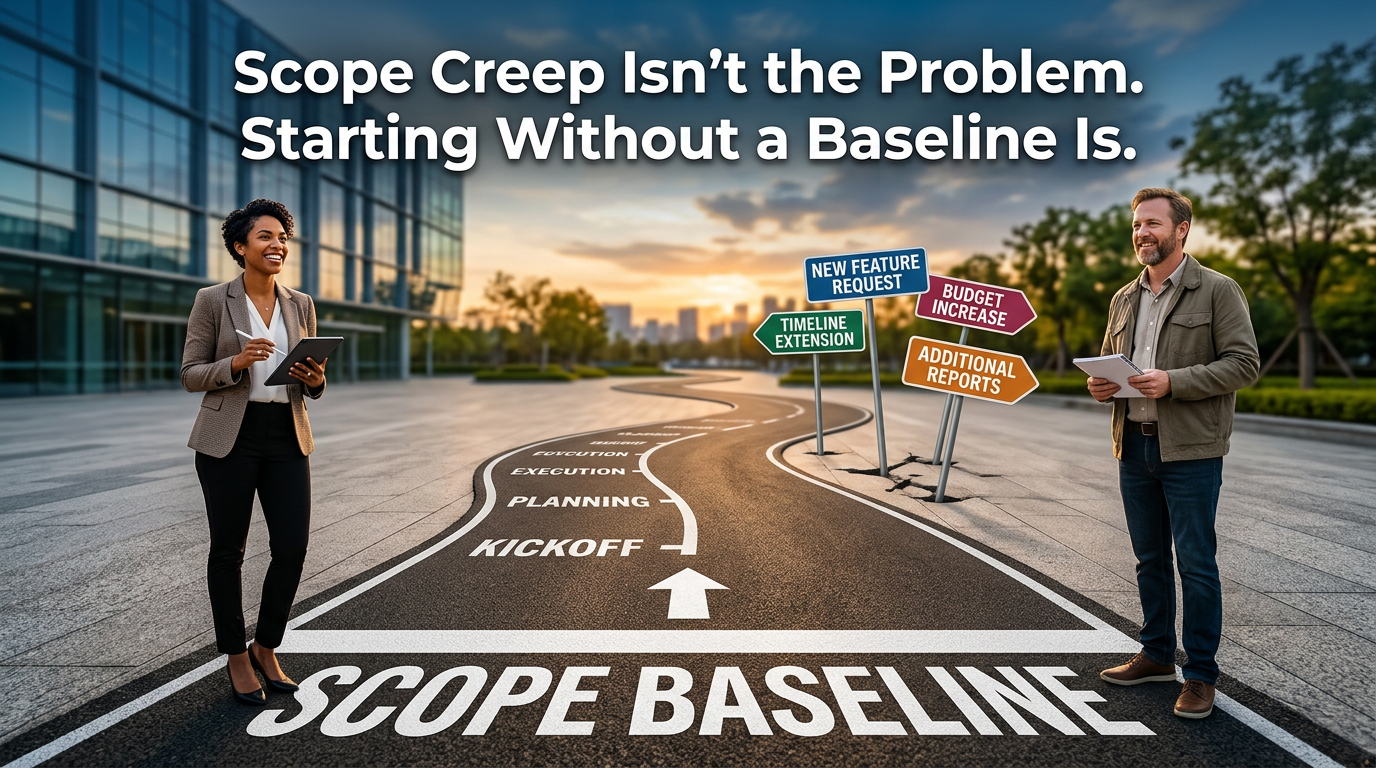
- Baseline.
- Risk.
- Milestones.
- Dependencies.
- Change.
- Forecast.
- Variance.
- Acceptance.
- Lessons learned.
A business owner who understands those concepts becomes a better sponsor. A better customer. A better decision-maker. And usually a better estimator.
That is one of the reasons I see value in tools that teach good project habits while helping people do the work.
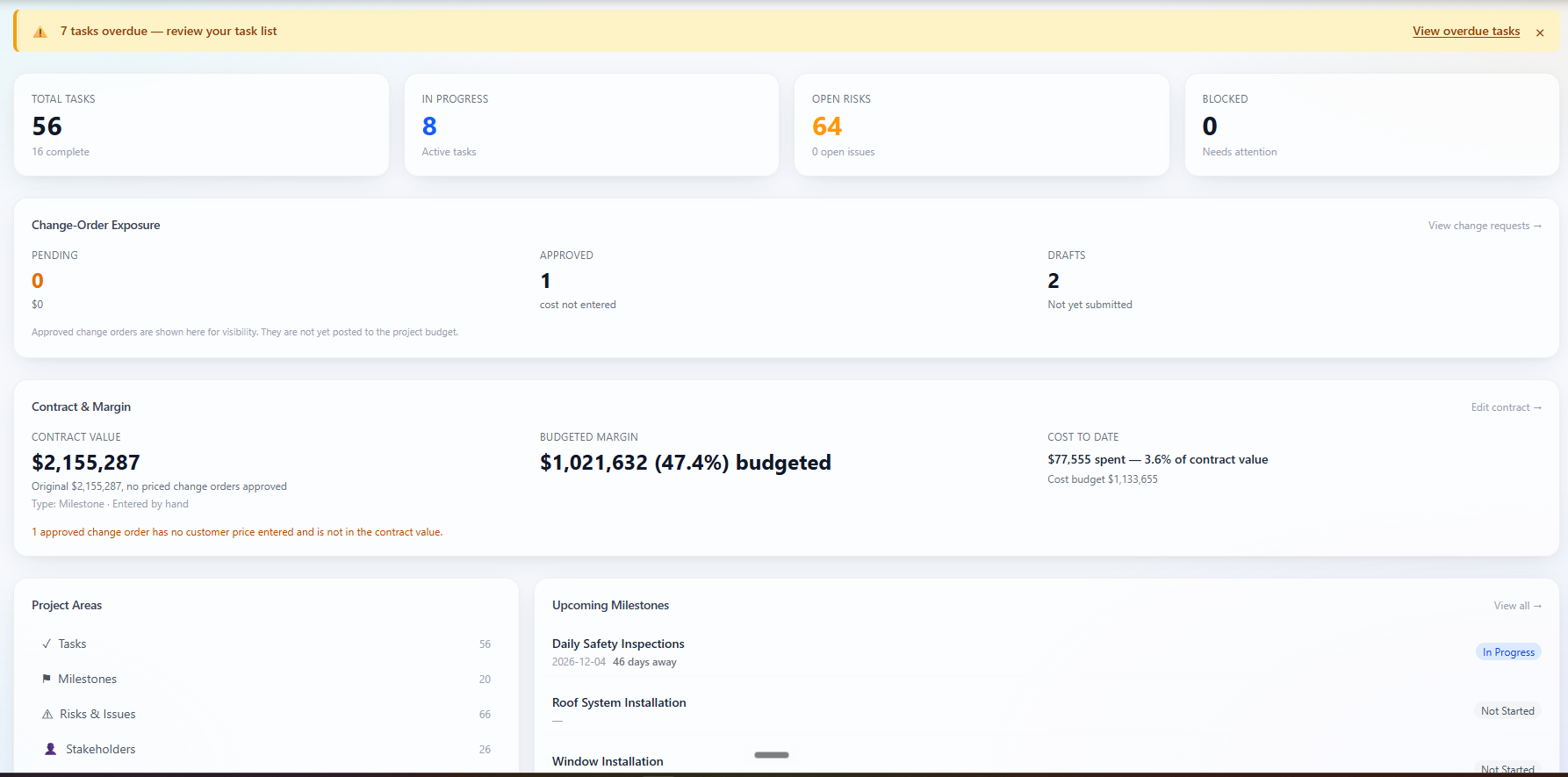
That is where AltaVue fits. AltaVue is designed for people who may not have spent ten years studying project management. The idea is to make project management approachable.
- Define the project.
- Identify stakeholders.
- Clarify outcomes.
- Build scope.
- Capture requirements.
- Prioritize.
- Identify risks.
- Create a baseline.
Then carry that structure into estimating, scheduling, tracking, time, agile work, and financial visibility. The philosophy is simple:

Define once. Use everywhere.
For an experienced project manager, that creates consistency. For a small business owner, it creates a way to learn disciplined project management while actually running a project.
That matters.
Because the answer is not always: “Hire a project manager.”
Sometimes the answer is: “Start managing projects like projects.”
Then, as the business grows, decide when the owner’s time is better spent leading the company than coordinating every project detail. That is the real distinction. A small business owner absolutely can manage projects. But the owner’s job is ultimately to build a business that can operate without every decision, status update, customer question, and project problem running through them personally.
Project management helps make that possible. So here is the question I would ask small business owners:
Are you managing your projects? Or are your projects managing you?
The answer may tell you whether it is time to change how the business operates.