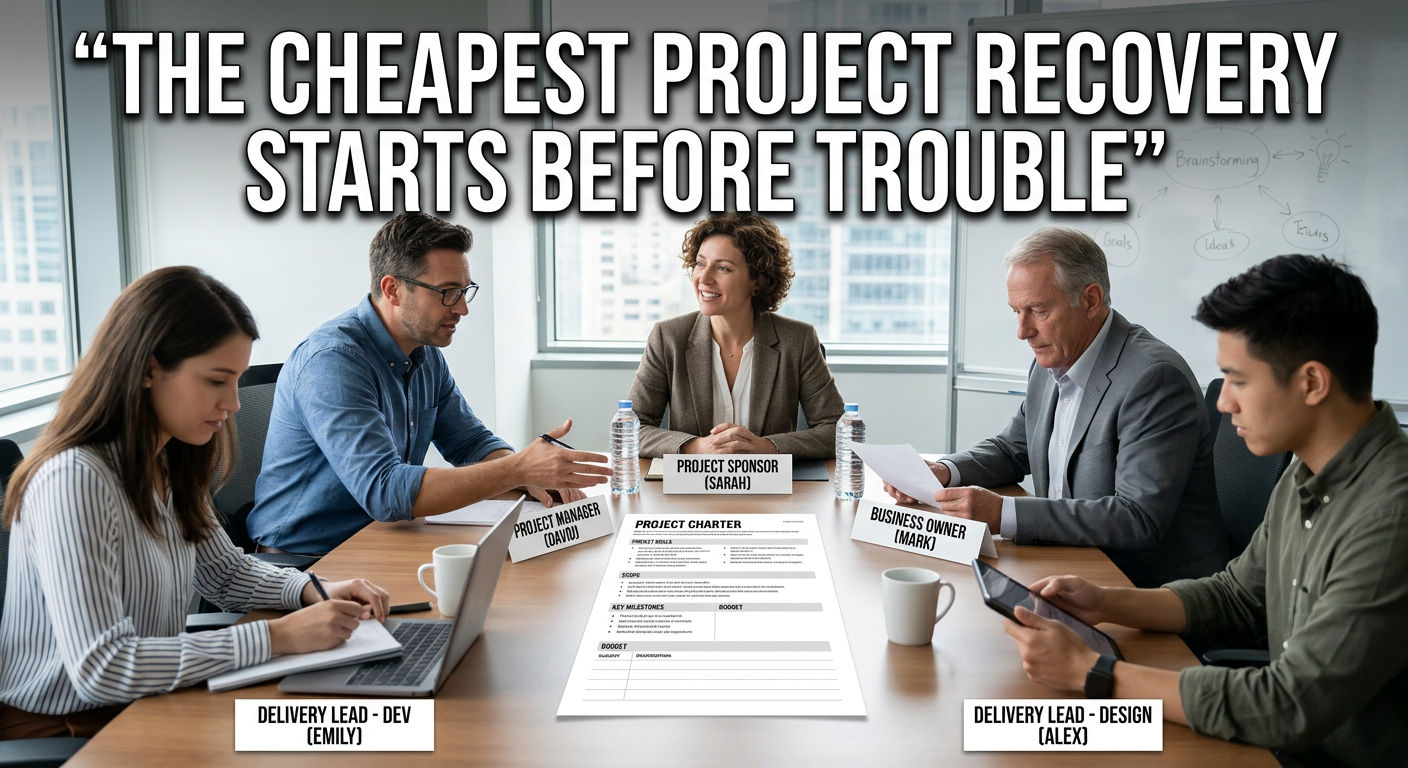
There’s a particular kind of project meeting I’ve never liked.
Everyone shows up prepared. The project manager has an updated schedule. The team has a list of completed work. Risks and issues are documented, and the dashboard is mostly green. Then someone asks a question that’s been hanging around for three weeks: who’s approving the change to the customer workflow?
A discussion follows. People walk through the history. Two departments disagree about what was decided last month. Someone suggests taking it offline. The meeting ends, and another week goes by.
Nothing looks especially wrong with the project until the team hits the point where it can no longer work around that missing decision.
I call that decision debt. It’s the cost a project builds up when a necessary decision gets postponed, handed to nobody, or reopened again and again without a clear resolution. Like technical debt, you can live with it for a little while. Leave it alone and it starts charging interest.
That interest shows up as rework, idle time, conflicting assumptions, vendor delays, frustrated stakeholders, and decisions made quietly by the people least authorized to make them. Meanwhile, the project still looks busy. That’s part of the problem.
Activity Is Not the Same as Progress
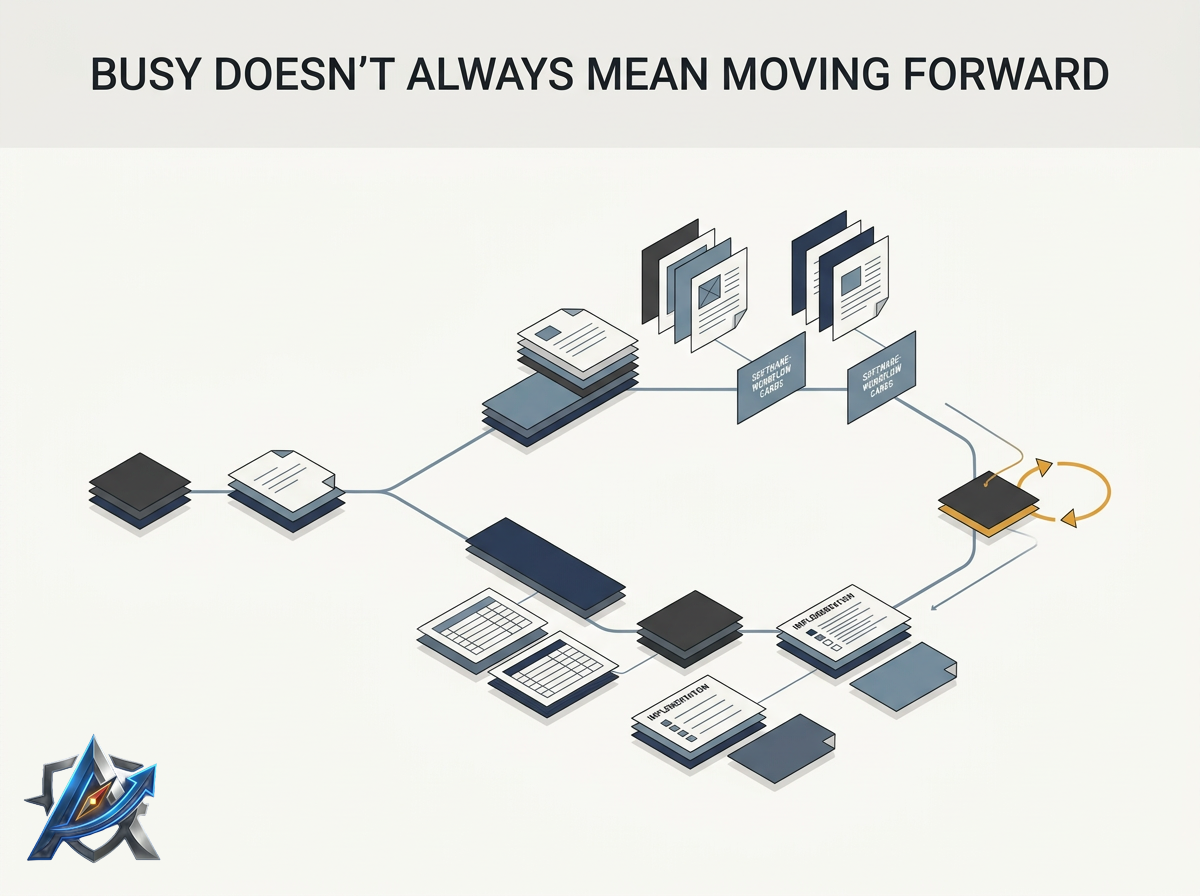
One of the easiest mistakes in project management is confusing movement with advancement. A team can close forty tasks and be no closer to the business outcome that actually matters.
If the product owner hasn’t decided which customer requirements are mandatory, developers keep building against assumptions. If a sponsor won’t approve a scope tradeoff, estimators keep revising numbers without knowing which version of the work is real. If operations hasn’t agreed to an implementation window, the schedule is just a nice-looking theory.
I’ve worked in environments where everyone was doing their job, at least as they understood it, and the project still struggled. The individual performers weren’t the problem. The problem was that there was no mechanism for turning competing interests into an actual decision.
That’s why I get skeptical when the proposed fix for a troubled project is more status reporting. A better dashboard might make the delay easier to see. It won’t make the decision for you.
Complexity Raises the Price of Indecision
PMI’s 2026 Pulse of the Profession found that 81% of project professionals say projects have become more complex in recent years. In the same research, PMI reported that nearly a third of complex projects, 31%, fail to achieve the full scope of their intended benefits. That doesn’t mean a third of projects get canceled. It’s a warning about value that never shows up.
Complexity creates more decision boundaries. Finance needs one thing and operations needs another. The implementation partner needs an answer by a certain date. Security, legal, or procurement may have legitimate concerns nobody saw during initial planning. A project manager can manage all of those dependencies, but a project manager cannot manufacture authority.
PMI recently announced M.O.R.E. at Scale, a course aimed at executives, sponsors, PMO leaders, and governance stakeholders, and I think the emphasis is exactly right. Project success depends partly on decisions made outside the project team, not just on the team’s own discipline. That’s where governance stops being a word in the charter and starts being useful.
Four Signs Your Project Is Carrying Decision Debt
The first is the recurring open item. It shows up on the same meeting agenda week after week, but the wording changes just enough to make it look new.
The second is parallel work. Two groups keep moving in different directions because nobody has settled which approach is approved, and each group can honestly report progress.
The third is informal approval. Someone tells the team to go ahead because the delay is hurting the schedule. Later, the actual decision-maker disagrees, and the work comes back.
The fourth is the mysterious milestone. A major date keeps slipping, but the schedule points to a generic dependency instead of the specific unanswered question holding everything up.
None of these automatically means poor leadership. Some decisions are genuinely hard. But hard decisions still need an owner, a deadline, and a path to resolution.
Give Decisions the Same Discipline You Give Tasks
When I assess a project that isn’t moving the way it should, I want to see more than a risk register and a task list. I want to know what the team is waiting on and who has the authority to answer.
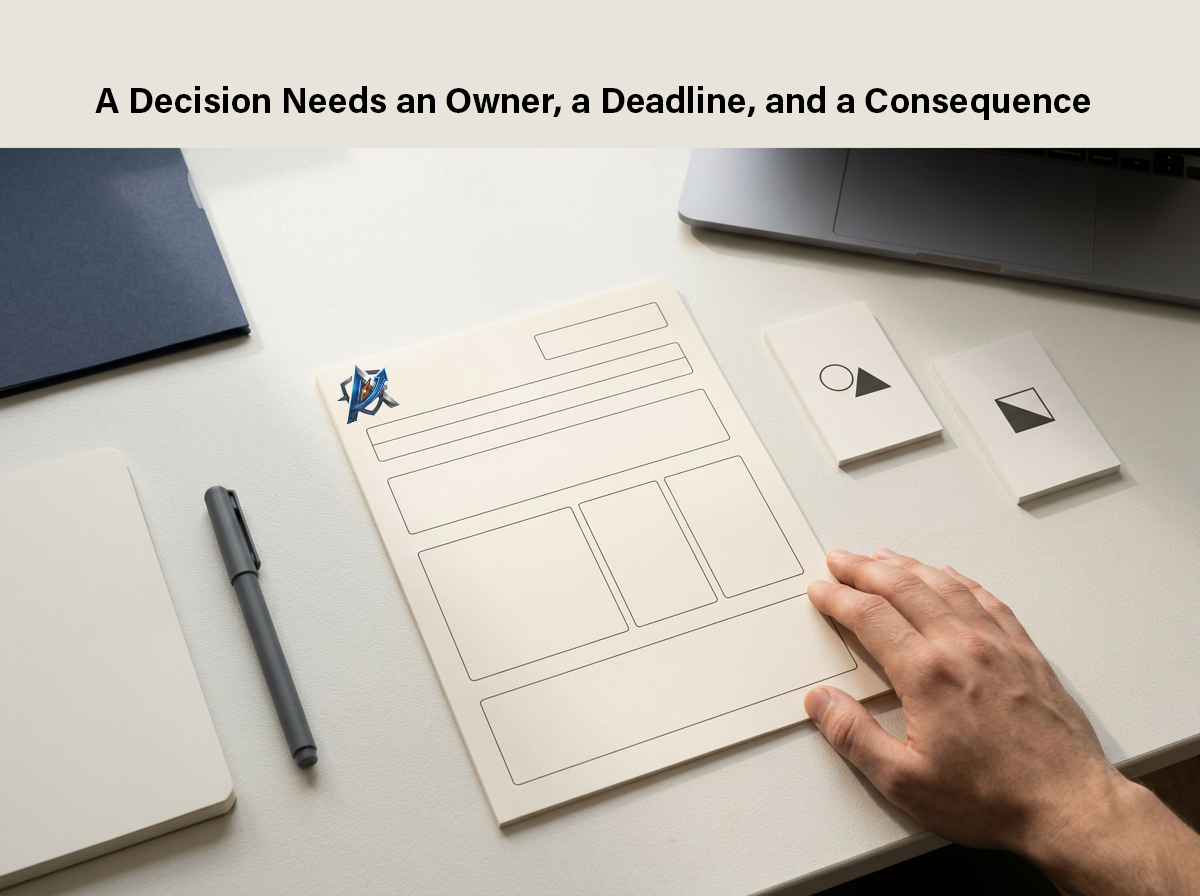
A simple decision record is usually enough. Capture the exact question, the options on the table, who’s responsible for deciding, when the answer is needed, what happens if it’s late, and the final decision along with the reasoning behind it. The template isn’t the important part. The conversation it forces is. Compare these two:
“Approve the design.”
“By Thursday, choose between keeping the existing customer approval step or removing it, because development of the workflow can’t be finalized until that decision is made.”
The first is a wish. The second is something a leader can actually act on.
It also helps to separate decisions from advice. Stakeholders deserve to be heard, especially the ones who live with the consequences. But consultation shouldn’t turn into an accidental veto. Agree early on who recommends, who must be consulted, and who decides. Then document the exceptions instead of letting them quietly become policy.
For significant changes, I prefer a short decision meeting built around a recommendation, the tradeoffs, and the consequences. Bring the right people, lay out what’s known, be honest about what’s still uncertain, and leave with either a decision or a specific escalation. A meeting whose only outcome is scheduling another meeting should worry you.
The Sponsor Is Part of the Delivery System
I’ve spent enough time around projects to know that sponsors are busy. So are department heads, customers, and business owners. That isn’t going to change.
The answer is to design decision-making around the amount of attention leaders can actually give. Hand them a short, clear brief. State the choice in plain English. Explain what happens if they do nothing. Ask for a decision by a date tied to a real dependency, not an arbitrary “urgent” label. And escalate before the team runs out of options, not after. The Army taught me that a good decision made on time beats a perfect one made too late, and projects work the same way.
Sometimes the honest recommendation is to pause the affected work. That beats spending another month building something nobody has authorized.
For a small business, the consequences can be even sharper. A delayed customer decision can tie up your only project manager, hold a subcontractor’s schedule hostage, or force the owner to choose between two paying jobs. You don’t need a large PMO to manage that risk. You need clarity and follow-through.
One Question for Your Next Project Review
Alongside schedule, budget, risks, and milestones, ask one more question: which important decisions have we failed to make, and what are they costing us right now?
That question changes the tone of the meeting. It moves the conversation away from whether everyone has been busy and toward whether the project is actually being allowed to move forward.
I’d rather have a project with a slightly messy dashboard and clear decisions than a beautifully reported project that’s quietly piling up commitments nobody has settled. Documentation matters. Planning matters. Tools matter. But when the work reaches a crossroads, someone still has to decide which road to take.
That decision is part of delivery, not an interruption to it.